.png)
Why Website Traffic Isn’t Turning Into Leads
- 4 days ago
- 4 min read
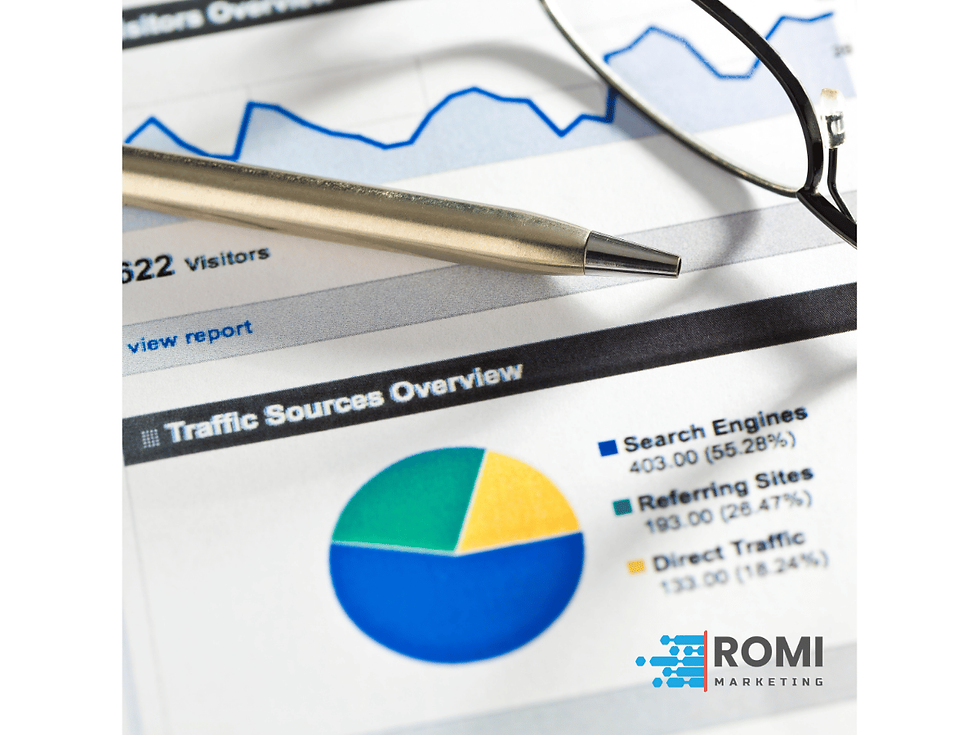
Website traffic can feel like progress. More visitors suggest that people are finding your business, engaging with your content, or responding to your marketing efforts.
But traffic alone does not create growth.
If visitors arrive and leave without calling, booking, filling out a form, requesting information, or taking the next step, the issue is not visibility. The issue is conversion.
Many businesses do not have a traffic problem.
They have a conversion problem.
Traffic Is an Input, Not an Outcome
Traffic is an important part of marketing performance. Without visibility, it is difficult to generate awareness, interest, or demand.
But traffic is only the beginning of the customer journey.
A website visit does not automatically indicate buying intent. Some visitors are researching, some are comparing options, and some may not be the right fit at all.
That is why traffic should be evaluated by what happens next.
If website visits are increasing but leads are not, leadership needs to understand where the conversion path is breaking down.
Why Visibility Does Not Always Lead to Action
Visibility gets people to the website. Conversion gives them a reason to act.
The problem is that many websites are built around information rather than decision-making. They explain what the business does, but they do not always guide the visitor toward a clear next step.
A visitor should quickly understand three things:
what problem the business solves
why the business is credible
what action to take next
If those answers are unclear, people may leave even if they were interested.
Attention is fragile. Confusion usually wins.
Where Website Conversion Breaks Down
Website conversion problems often begin with messaging. If the homepage or landing page does not clearly communicate value, visitors have to work too hard to understand relevance.
Another common issue is mismatch. A visitor may click from a specific ad, search result, or social post expecting one thing, then land on a page that gives them something too broad or unrelated.
Calls to action can also weaken conversion. If the next step is vague, buried, low-value, or too demanding, visitors may not move forward.
Forms and contact paths matter as well. Too many fields, unclear expectations, slow-loading pages, or weak mobile experiences can create friction at the exact moment someone is ready to engage.
Small points of friction add up quickly.
Why This Is a Marketing Strategy Issue
It is easy to treat website conversion as a design problem. Design matters, but conversion is rarely solved by layout alone.
A website reflects the quality of the marketing strategy behind it.
If the audience is unclear, the messaging will feel broad. If the offer is vague, the call to action will feel weak. If the customer journey is not defined, the website will not know where to guide the visitor.
This is why conversion strategy has to connect positioning, content, analytics, user experience, and follow-up.
A high-performing website is not just a digital brochure.
It is part of the marketing system.
The Role of Traffic Quality
Not all traffic has equal value. A smaller number of high-intent visitors can be more valuable than a large number of low-intent visitors.
This is especially important when evaluating SEO, paid ads, social media, referrals, and AI-driven discovery. Each source may bring visitors with different expectations and different levels of readiness.
If a business only measures total traffic, it may miss the real issue.
The question is not simply how many people arrived. The better question is whether the right people arrived and found a clear reason to take action.
Traffic quality and conversion strategy have to work together.
What Better Conversion Requires
Improving website conversion starts with clarity. The website should communicate who the business helps, what problem it solves, and why the visitor should take the next step.
The next step is alignment. Landing pages should match the intent of the traffic source, whether that visitor came from search, paid advertising, email, social media, or referral.
Calls to action should be specific and useful. “Contact us” may be appropriate in some cases, but stronger conversion paths often provide clearer value, such as booking a consultation, requesting a quote, downloading a guide, or starting an assessment.
Analytics should then identify where visitors drop off. Conversion improvement depends on knowing which pages attract attention, which paths generate action, and where friction prevents progress.
The goal is not to guess harder.
The goal is to remove uncertainty from the conversion process.
How Website Conversion Improves ROMI
Return on Marketing Investment improves when businesses get more value from the traffic they already earn or pay for.
This is why conversion matters so much. If a company increases traffic without improving conversion, marketing spend may rise without producing enough additional business value.
Improving conversion changes the economics.
The same traffic can produce more inquiries. The same ad budget can generate better opportunities. The same content strategy can contribute more directly to growth.
Before investing heavily in more visibility, businesses should understand whether their existing visibility is being used efficiently.
A leaky website makes every marketing channel work harder than it should.
The Strategic Takeaway
Website traffic is useful, but it is not the final measure of marketing performance.
If visitors are not becoming leads, the business needs to look beyond visibility.
The issue may be messaging, audience alignment, conversion paths, user experience, or weak follow-up.
The strongest marketing strategies do not only bring people to the website. They guide the right people toward the right action.
That is where traffic becomes opportunity.
If your website is getting traffic but not producing enough qualified leads, the issue may not be more marketing activity. It may be the conversion system behind it.
ROMI Marketing helps businesses connect strategy, messaging, analytics, and execution to improve Return on Marketing Investment.
Get in touch to build a marketing approach that turns visibility into measurable growth.
Comments